The objectives of "Loss Prevention" activities within the oil & gas, energy, and process industries involve the identification and evaluation of process safety concerns, potential plant accidents, and losses. These activities aim to propose engineering and operational measures to prevent or mitigate such losses. Benchmark Consulting Engineering L.L.C provide specialized services for Loss Prevention and Safety Engineering that involve conducting the following:
- +971 50 122 9428
- admin@benchmark-ae.com (General)
- Ibrahim@benchmark-ae.com (Commercial)
- abrar@benchamrk-ae.com (Technical)

Loss Prevention And Safety Engineering
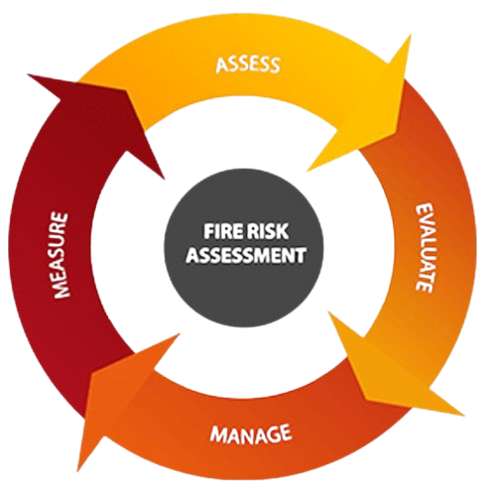
Fire and Explosion Risk Analysis (FERA)
is a systematic approach to identifying and evaluating risks associated with fire and explosion hazards. The outcomes of this assessment are utilized to ensure safe facility designs, define passive and active fire protection needs, and contribute data for various assessments such as Escape and Evacuation Risk Assessment (EERA), Emergency Systems Survival Assessment (ESSA), and Quantitative Risk Assessment (QRA) studies. Read More

Emergency Systems Survivability Analyses (ESSA) :
is a methodology used to evaluate the survivability of the emergency system to fulfill their intended functions during major accident events, such as fires, smoke incidents, explosions, and hazardous gas releases. ESSA assess vulnerability of emergency systems to demonstrate their capability to execute their safety functions under the specified operating conditions.
Read More
Escape, Evacuation and Rescue Analyses (EERA)
is a methodology used to evaluate the effectiveness of escape, evacuation, and rescue (EER) measures and arrangements. The aim of EERA is to verify the presence of sufficient measures within the facility to facilitate safe escape, muster, evacuation, and rescue operations during significant accidents to prevent injuries and fatalities.
Read More
Bow-Tie Analysis :
includes registration of Major Accident Hazard prevention, detection, control, and mitigation systems identified during the bowtie workshop as HSE Critical Equipment and Systems (HSECES). Bowtie diagrams are employed to illustrate the function of each HSECES concerning the relevant threat and consequence of a Major Accident Hazard (MAH). An evaluation of the effectiveness of each system is conducted, including its capability (survivability) to remain operational during foreseeable major accident scenarios. For identified HSECES Items, Benchmark Consulting Engineering L.L.C develops the necessary Performance Standards (PS) for all project phases including operation. Performance Standards (PS) is a statement of assurance that the HSECES will perform its function(s) as intended, shall be reliable, available and survive the effects of a major accident as and when required.
Read More
Hazardous Area Classification:
is an approach used to analyze and classify the environments where there is a possibility of explosive gas atmospheres forming. The Hazardous area classification drawings and the hazardous area classification Schedule in compliance with any major standard used in the oil & gas industry are deveopped to facilitate the proper selection and installation of the apparatus to be used safely in that environment, taking into account the properties of the flammable materials that will be present.
Read More
Control of Major Accidents Hazards (COMAH)
is a structured process used to identify, assess, and document Major Accident Hazards (MAH) and associated risk levels for new projects, existing facilities, and ongoing operations. It is a facility or operation-specific showcase of the Health, Safety, and Environment (HSE) Management System in practice, providing documentation that demonstrates risks have been or will be minimized to an "acceptable" or "as low as reasonably practicable" (ALARP) level.
Read More
As Low As Reasonably Practicable (ALARP)
demonstration workshop is carried out to show that risk has been minimized to a level considered "as low as reasonably practicable." This process involves weighing the reduction in risk against the associated time, effort, complexity, and cost required to achieve it. The ALARP level represents the point, objectively evaluated, at which further reduction measures' time, effort, complexity, and cost become unreasonably disproportionate to the additional risk reduction achieved.
Read More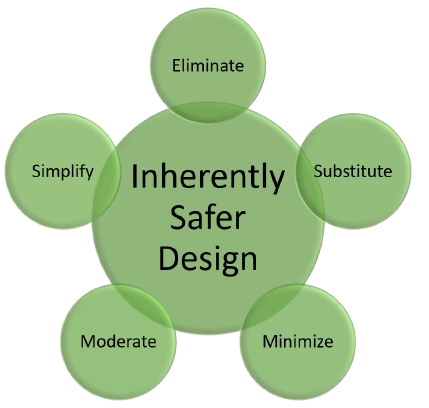
Inherent Safe Design (ISD) Review
is a philosophical approach to process safety in that focus on the designing of processes and products in such a way to eliminate hazards completely or sufficiently to minimize their magnitude so as to eliminate the hazard and negate the need for elaborating safety systems incorporated in the design.
Read More
Dropped Object Study
is to assess if dropped objects pose a substantial risk to hydrocarbon installations potentially causing loss of containment during normal production operations and maintenance activities at the facilities, and also to verify the design load of laydown areas that may be impacted by dropped objects during lifting activities within the facilities.
Read More